
INTERIOR DESIGN BLOG
Designing Small Living Rooms That Feel Expansive
At LUSH Interiors, renovating smaller living room becomes an exercise in purposeful design. By focusing on essential features that enhance both function and atmosphere, we create spaces that feel open, inviting, and quietly refined.

LUSH Interiors Featured on Houzz:
One of our living room projects was featured on Houzz. The article highlights some principles we apply regularly in our work.
Here, we expand on those concepts and how they translate into thoughtfully designed living room renovations.
1. Built-Ins as an Essential Design Element
One of the most effective ways to bring structure and clarity to a small living room is with built-in millwork. At LUSH, we treat built-ins as part of the architecture of the space rather than an addition. This allows multiple functions to be resolved in a single, cohesive design.
We focus on:
- Proportions that align with the room’s dimensions
- Integrated storage to reduce visual clutter
- Shelving and display areas that feel balanced, not heavy
- Lighting that adds warmth and depth
Custom millwork allows us to eliminate the need for multiple standalone pieces, creating a space that feels calm and intentional.
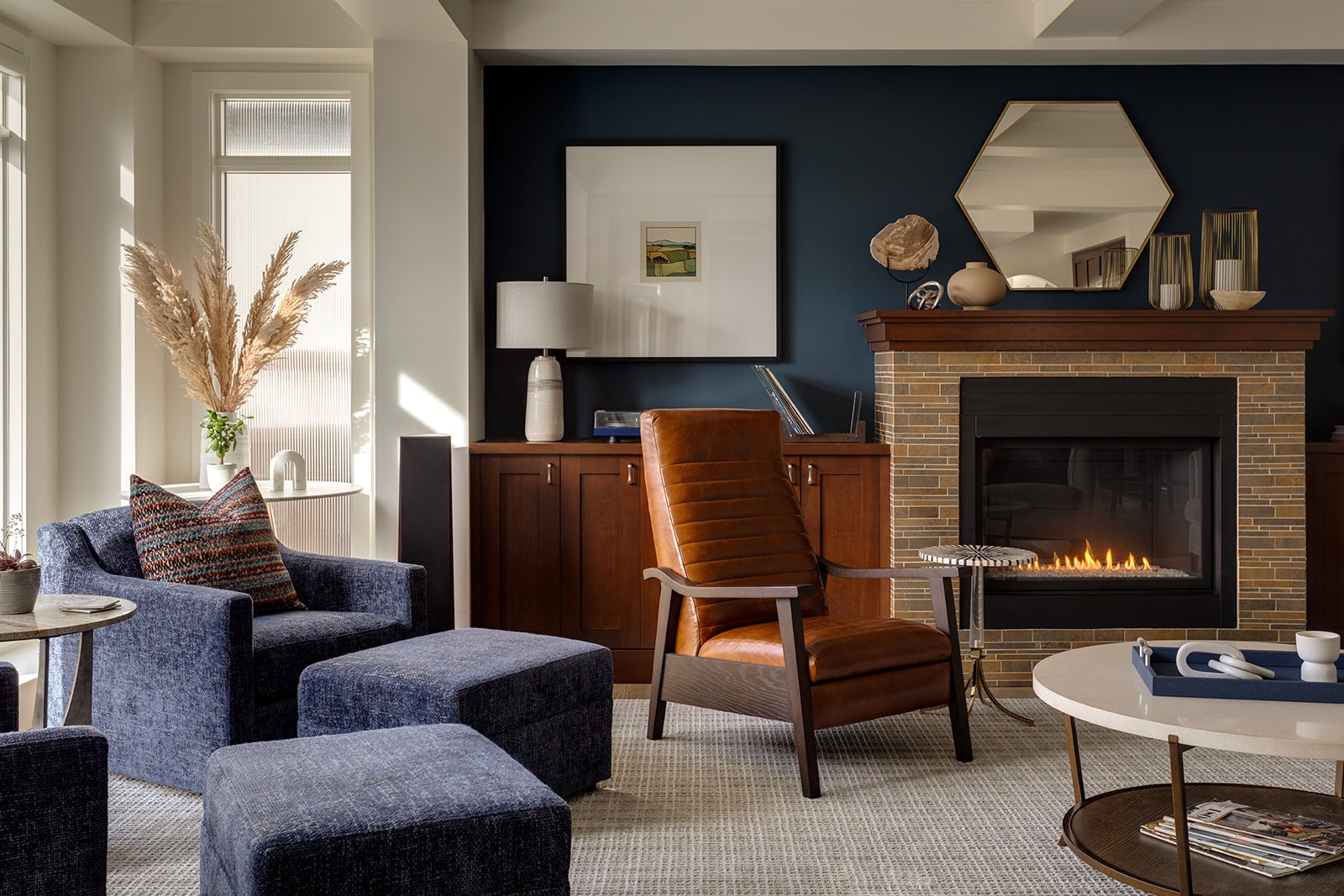
In this West Hillhurst home renovation, we saw an opportunity not just to refresh a space, but to completely reimagine how it could be lived in. Flanking the fireplace were a pair of existing built-ins the client initially considered removing. Rather than starting from scratch, we leaned into their potential, transforming them into the cornerstone of a thoughtfully curated listening lounge.
The built-ins now house the client’s vinyl collection and record player, turning what was once an overlooked feature into a moment of personality and purpose. By carefully decluttering the surrounding area and introducing layered lighting, we created a warm, inviting ambiance that encourages slowing down and savoring the ritual of music.
2. Rethinking Seating for Better Flow
A traditional sofa is not always the most effective solution in a smaller living room. We often design seating plans that move away from a single dominant piece and instead create a more flexible arrangement.
This may include:
- A pair of tailored chairs
- Swivel seating for adaptability
- A chaise lounge for comfort without blocking movement
By rethinking seating, we improve circulation and create a layout that feels open rather than constrained.

In this Bridgeland condo project, the layout was thoughtfully reimagined to balance comfort with openness. Rather than introducing a second sofa or loveseat, we chose to anchor the living room with a single sofa positioned along the far wall, complemented by a pair of carefully selected lounge chairs.
This approach keeps the visual weight of the room light while maintaining an effortless sense of flow, an essential consideration in condo living. The chairs offer a layer of flexibility that a larger upholstered piece simply can’t, allowing the space to adapt with ease, whether for entertaining or everyday lounging.
Easily repositioned, they can be drawn in for conversation, angled toward the television, or shifted entirely to open up the room. The result is a space that feels both intentional and relaxed, where form meets function in a way that enhances how the home is lived in.
3. Creating a Clear and Confident Focal Point
In smaller spaces, visual clarity is essential. We recommend designing each room around a defined focal point. This gives the space structure and directs attention in a deliberate way.
A focal point may be:
- A sculptural piece of furniture
- A feature wall or fireplace
- A statement light fixture
- A carefully selected work of art
When the eye has a place to land, the room feels composed and balanced, regardless of its size.
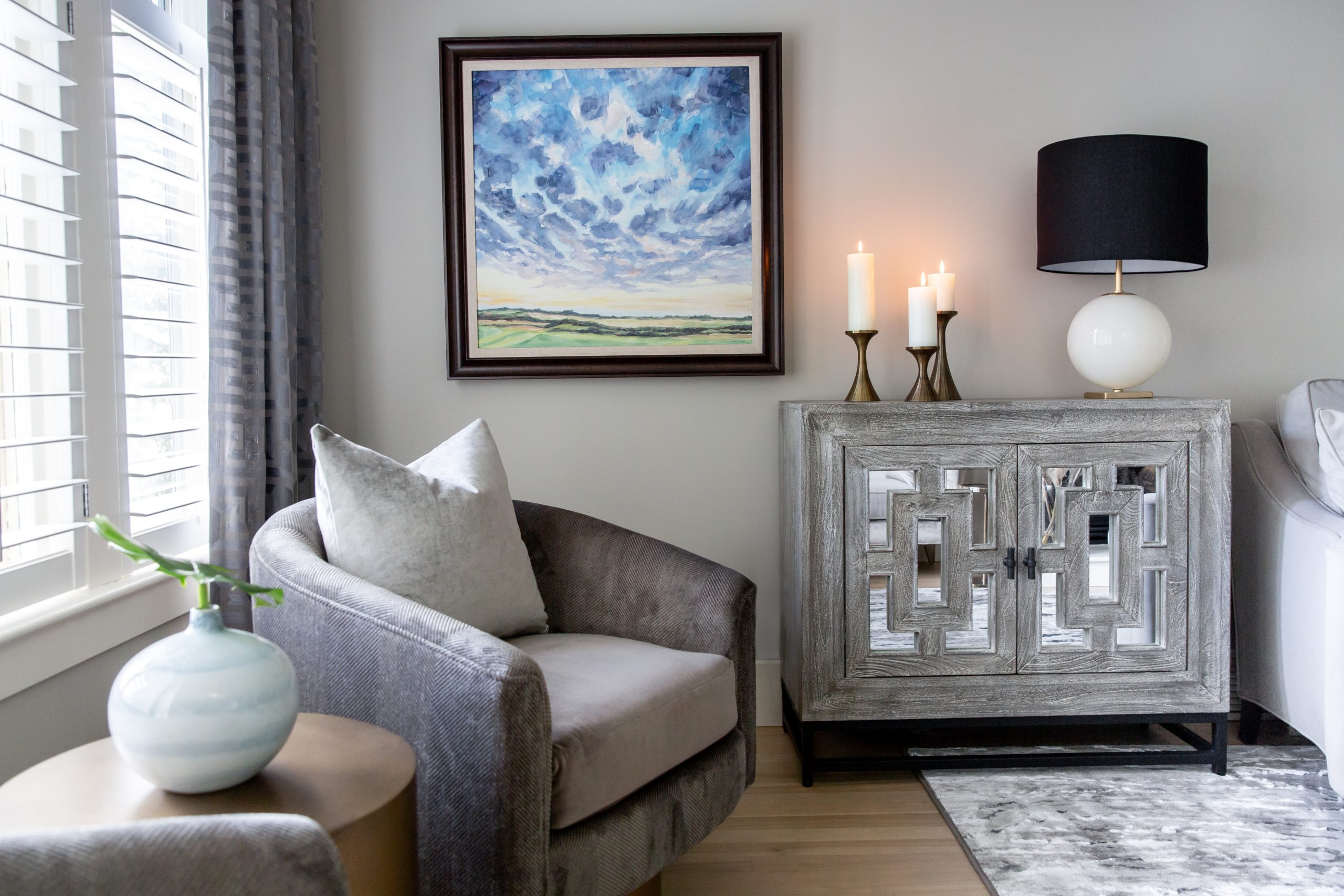
In our Mount Royal project, the living room presented a unique design challenge: long and narrow in proportion, with a fireplace that sat off-centre, leaving the space without a natural focal point. Rather than forcing symmetry where it didn’t exist, we embraced the architecture and reimagined how the room could guide the eye.
At the far end of the space, we created a carefully composed vignette designed to anchor the room visually. A pair of custom chairs introduces both structure and softness, while an eye-catching cabinet adds depth and character. Styled with layered accessories and accented with thoughtfully placed lighting, this moment draws you in from the moment you enter the room.
The result is a deliberate focal point that brings balance to the space without competing with the existing fireplace. It creates a sense of destination, inviting you to move through the room and experience it in full, while adding both function and personality in a way that feels effortless and refined.
4. Layering for Depth and Warmth
A small living room should not feel sparse. We use layering to create depth and a sense of completeness, while maintaining a refined and uncluttered aesthetic.
Our approach includes:
- Textiles that introduce softness and contrast
- Accent lighting to create dimension
- Personal objects that reflect the homeowner
- A controlled palette to maintain cohesion
The goal is to create a space that feels lived-in and considered, without feeling crowded.
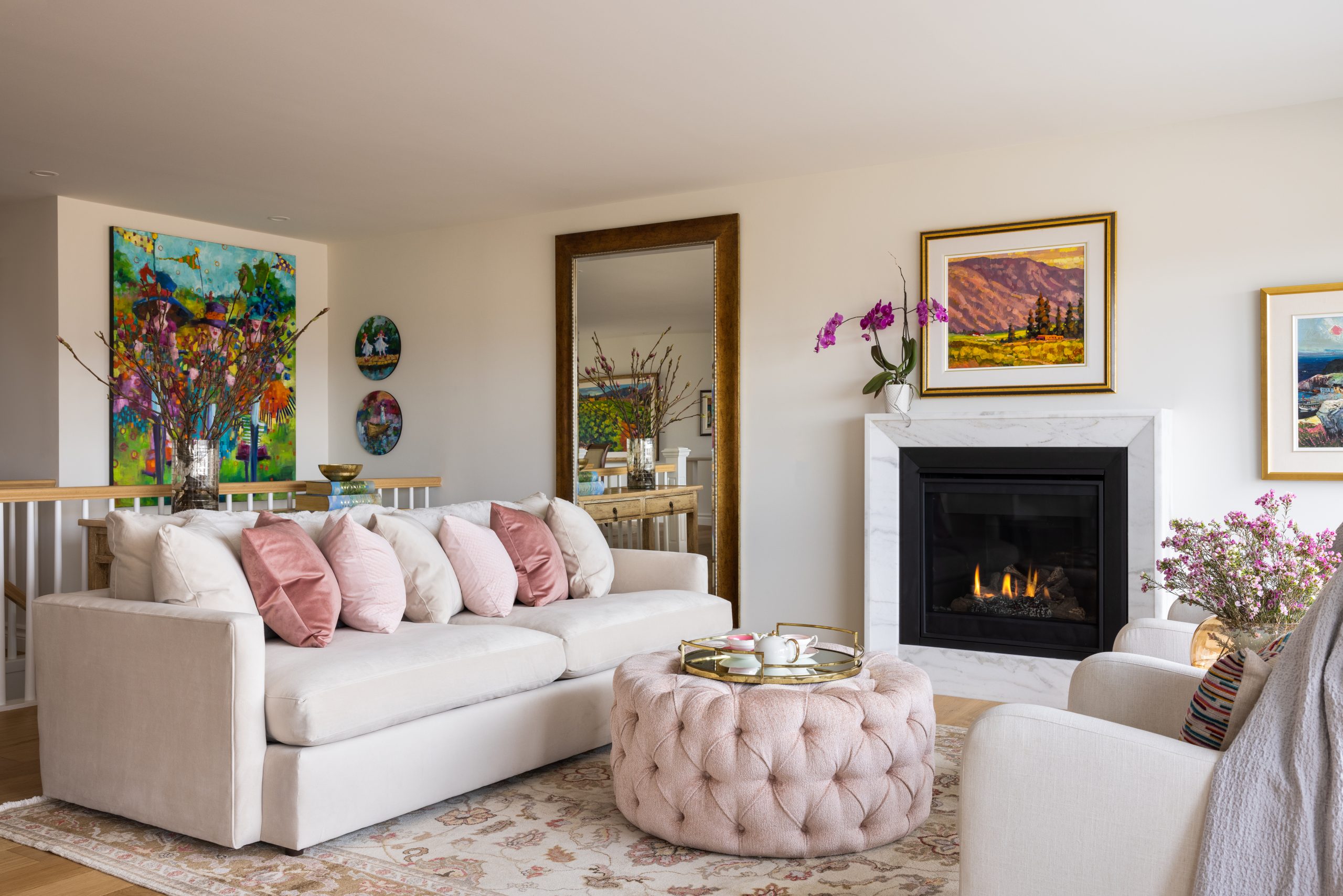
Varsity Estates Interior Design Project in Calgary
In our Varsity Estates project, we embraced the client’s love of pink as an opportunity to create a cohesive, layered palette that feels both personal and refined. Rather than treating it as an accent, we allowed this favourite hue to guide the design, thoughtfully weaving it throughout the home in a way that feels elevated rather than overwhelming.
In this smaller, detail-rich space, varying shades of pink were introduced through key furnishings and soft layers, creating depth and visual interest. A custom ottoman anchors the room, while an area rug and curated toss pillows echo the palette in subtle, tonal ways. Hints of pink carry through in the artwork and florals, adding moments of softness and continuity.
By repeating the colour in different textures and intensities, the space feels intentional and harmonious. The controlled palette not only ties every element together, but also enhances the sense of openness, proving that when used thoughtfully, even a bold favourite can create a space that feels calm, cohesive, and effortlessly inviting.
Practical Interior Design Recommendations from LUSH Interiors
Designing a small living room requires a thoughtful balance of function, proportion, and restraint. At LUSH Interiors, we approach compact spaces with the same level of detail and intention as larger homes, ensuring every decision supports both daily living and long-term comfort.
Below are practical interior design recommendations to help maximize space, improve flow, and elevate the overall experience of your living room.
Plan Electrical Early
Lighting plans, outlet placement, and media integration should be resolved at the beginning of the interior design process. This allows for clean layouts, concealed wiring, and intentional lighting layers that support both ambiance and function. In Calgary home renovations and new builds, early electrical planning also ensures compatibility with custom millwork, built-ins, and future technology upgrades.
Prioritize Scale and Proportion
Furniture selection is one of the most critical elements in small living room design. Each piece should feel appropriately scaled to the room, allowing for comfortable movement and visual balance. Try low-profile seating, tailored sofas, and carefully sized coffee tables to maintain openness while still providing comfort.
Invest in Fewer, Better Pieces
A curated approach to interior design always delivers a stronger result. Rather than filling a room, focus on fewer, well-designed furnishings that contribute to a cohesive and refined space. Quality materials, timeless silhouettes, and thoughtful placement create a living room that feels calm, elevated, and intentional.
Consider Sightlines and Layout
What you see when entering the room sets the tone. Clear sightlines, aligned furniture, and unobstructed views help a small living room feel more expansive. Strategic furniture placement can also improve flow between adjacent spaces, especially in open-concept homes common in Calgary interior design projects.
Integrate Built-In Storage
Custom built-ins, integrated shelving, and concealed storage solutions allow everything to have its place without overwhelming a smaller living room. Built-in cabinetry also creates architectural interest while supporting a more organized and refined environment.
Layer Lighting for Depth and Flexibility
A well-designed lighting plan includes ambient, task, and accent lighting. In a small living room, this layering adds depth and allows the space to shift throughout the day. Wall sconces, recessed lighting, and decorative fixtures can all work together to enhance both mood and usability.
Use Colour and Material with Intention
A restrained palette helps create visual continuity, while subtle variation in texture adds interest. Soft neutrals, warm woods, and layered textiles contribute to a space that feels both inviting and composed. Strategic contrast, whether through millwork, furnishings, or art, can define zones without visually shrinking the room.
Define Zones Without Dividing the Space
Even in a compact living room, it is important to establish functional zones such as seating, reading, or media. Area rugs, lighting, and furniture placement can subtly define these areas without adding physical barriers. This approach supports better usability while maintaining openness.
Incorporate Multi-Functional Elements
In smaller homes, flexibility matters. Consider furniture that serves more than one purpose, such as storage ottomans, nesting tables, or integrated desks within millwork.
Each of these solutions support smaller living rooms without compromising design integrity. Thoughtful interior design is not about adding more, it is about making each element work harder and more beautifully within the space. When carefully planned, a small living room can feel composed, functional, and quietly refined.
Planning Your Living Room Renovation?
If you are considering a renovation or redesign, early planning is essential.
At LUSH Interiors, we guide clients through:
• Layout planning and space optimization
• Custom millwork design
• Furniture selection and sourcing
• Material and finish coordination
Each step is considered in relation to the whole, ensuring the final space feels cohesive and well resolved.
Contact Us, we’d love to help.
CALGARY INTERIOR DESIGN FIRM
FREQUENTLY ASKED QUESTIONS
Through built-in storage, proper furniture scale, clear focal points, and layered lighting.
Not always. Chairs and flexible seating arrangements can provide better function and flow.
Yes. They improve storage, reduce clutter, and create a more cohesive design.
Start transforming your living space today with furniture that will leave everyone in awe! Contact Lush Interiors, your Calgary Interior Designer to schedule a consultation and discover how we can help you design custom furniture for your home.
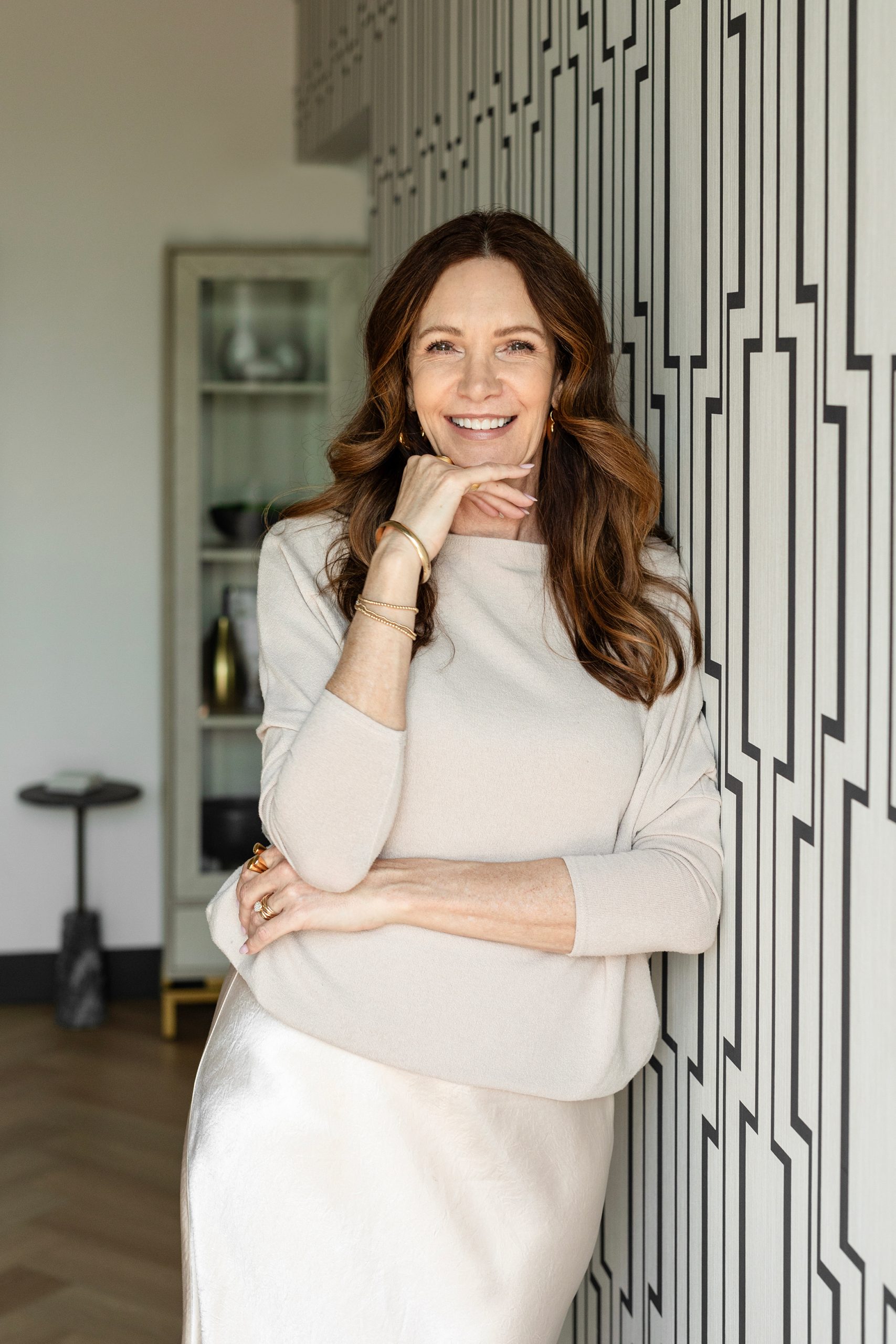
AUTHOR PROFILE
Charlene Threatful , Calgary Interior Designer
Charlene is an award-winning Calgary Interior Designer and owner of Lush Interiors. For over 20 years she has collaborated with clients to create their ideal living spaces. Charlene and her interior design team create spaces that blend classic elements with a modern sensibility, always incorporating her client’s unique personalities and esthetic. Join Charlene on this design journey as she explores the latest trends, uncovers timeless design principles, and discover innovative ideas to elevate your home or workspace.